Saturday, November 03, 2007

Why we don't use Canola oil (and why you shouldn't either!)

The more I learn about Canola oil, the more I am glad we don't use it! Here are some quick facts:
  • Canola oil comes from a genetically modified plant (originally rapeseed)
  • Canola oil is deodorized at very high temperatures (>300F), which destroys any possible nutritive value it may have.
  • Rapeseed is a member of the mustard family, one of the most toxic of all plants, and is shunned by insects. You can use Canola oil (shaken with water) as an effective bug spray on your indoor plants.
  • Studies of canola oil done on rats indicate many problems. Rats developed fatty degeneration of heart, kidney, adrenals and thyroid gland. When the canola oil was withdrawn from their diet, the deposits dissolved, but scar tissue remained on the organs. No studies were done on humans before it was listed as GRAS (Generally regarded as safe) by the FDA.
Problems in humans take about 10 years to develop. How long have you been using Canola? Farming relatives have told us they stopped farming Canola because they believed it to be a poison.

Are you concerned enough about Canola oil to remove it from your life? If you are, you need to know where it is so you can stop using those products. Read your ingredients closely. Watch for, 'Canola Oil', 'Hydrogenated Canola Oil', 'vegetable oil' (most often this is Canola Oil disguised as something not so bad because Canola oil is so cheap).

Canola Oil is also present in soap from other companies. Ask yourself (and them) if using oil from a genetically modified organism is natural.

Pay close attention to your peanut butter, a staple in most people's diets. Peanut butter should only contain peanuts, and maybe salt... Do not eat margarine.

Some links to interesting articles:
http://www.portaec.net/library/food/canola_oil_is_an_industrial_oil.html
http://aspartame.ca/page_oho3.htm
http://implants.clic.net/tony/Corner22/32.html

Educate yourself, and live a healthier life.

Tuesday, October 30, 2007

NEW!
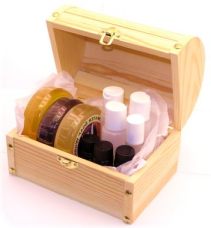
Deluxe Aromatherapy Starter Kit
15 mL


This aromatherapy kit contains
24 essential oils
for you to explore!
Start your Aromatherapy experience right & save money too! This kit contains 24 of our most popular essential oils in the 15 mL size. Perfect for those who are serious about exploring what aromatherapy has to offer & would like more of each oil to start out with. Comes with our Large Treasure Chest to keep them in, & a handy set of blending suggestions to get you started.
Comes with our special blending guide.
Contains 15 mL of each of the following oils
  1. Anise Star
  2. Basil
  3. Bergamot
  4. Cedarwood
  5. Cinnamon Leaf
  6. Clary Sage
  7. Clove Bud
  8. Cypress
  9. Eucalyptus
  10. Ginger
  11. Grapefruit
  12. Lavender 40/42
  13. Lemon
  14. Lemongrass
  15. Lime
  16. Orange
  17. Palmarosa
  18. Patchouli
  19. Pepper
  20. Peppermint
  21. Pine
  22. Rosemary
  23. Tea Tree
  24. Ylang Ylang III
Start your aromatherapy journey today. Get this great kit for an incredible price:

Separate Cost: $169.43
Special Price: $134.99

Buy it today at Clearwater Soap Works

Sunday, October 28, 2007

NEW!
Deluxe Aromatherapy Starter Kit
5 mL

This aromatherapy kit contains
35 essential oils
for you to explore!

Have you thought about aromatherapy, but didn't know where to start? Here's a great way to introduce yourself to 35 great essential oils at a great price. This set was specially selected for beginners, and comes with instructions and blending suggestions. Select this aromatherapy starter kit for a quick and painless introduction to what is sure to become your absolutely favourite pastime! Comes with 7 empty 5 mL bottles for you blends, and our special blending guide.

Comes with the following essential oils:
  1. Anise Star
  2. Basil
  3. Bergamot
  4. Birch, Sweet
  5. Camphor, White
  6. Cedarwood Himalayan
  7. Cinnamon Leaf
  8. Citronella
  9. Clary Sage
  10. Clove Bud
  11. Coriander
  12. Cypress
  13. Eucalyptus
  14. Fir Needle
  15. Ginger
  16. Grapefruit, Pink
  17. Ho Wood
  18. Lavender 40/42
  19. Lemon
  20. Lemon Eucalyptus
  21. Lemongrass
  22. Lime
  23. Litsea Cubeba
  24. Mandarin
  25. Orange, Sweet
  26. Palmarosa
  27. Patchouli
  28. Pepper Black
  29. Peppermint Japanese
  30. Pine Long Leaf
  31. Rosemary Spanish Camphor
  32. Spearmint
  33. Tea Tree
  34. Vetiver
  35. Ylang Ylang III
Start your aromatherapy journey today. Get this great kit for an incredible price:
Separate cost: $144.14
Special price: $109.99
Buy it today at Clearwater Soap Works

Friday, October 19, 2007

Precious Oils

Did you know we have some precious oils in stock now? Find Sandalwood and Bulgarian Rose Absolute here.

To get the most from these oils, you should dilute them in a suitable carrier oil such as Fractionated Coconut Oil or Jojoba Oil (Clear & Deodorized). Both of these carriers are perfect for use with precious oils since they are non-greasy and have no scent of their own. Get a roll-on glass bottle and you have your own precious perfume.

Wednesday, October 17, 2007

Want Better Looking Nails?

Sure, who doesn't? I just noticed how fast my nails are growing lately. I never had long nails because they were brittle and thin and kept breaking and ripping well below where they should be. Ouch!

Not anymore! My nails are flexible, strong, and are growing at an incredible rate. Not too surprising really when you consider what I use on them: Nothing at all! Well, not really. I don't use nail polish, I don't use cuticle enhancer, I don't use hand creams. I also don't use shampoo, conditioner or any other detergent based 'cleanser'. By now you can see where I am going with this!

Detergents and other similar products (such as skin creams, body lotions and nail polish) will damage all of the proteins of your body (hair, skin, nails). If you don't use these products, ipso facto, no damage. No damage = beautiful nails!

Oh, there is one thing I do use on them (and on my skin and hair)... a bar of natural soap.

Did you notice that we've got 12 new varieties now? Just in time for gift giving! Stay tuned for more gift items to be added very soon...

Saturday, October 13, 2007

Household Sprays Raise Asthma Risk?

A new study out indicates that using cleaner sprays (really any sprayed liquid) can damage your lungs and contribute to asthma. Using these sprays for as little as a week can cause damage.

The use of these sprays is so wide spread that an estimated 1 in 7 adult asthma cases could be linked to use of cleaning and deodorizing sprays, according to the study.

So, instead of using toxic aerosol or trigger spray liquids for household cleaning and air freshening, it is a good idea to dig out your bucket & cloth. Use hot water and plain soap to clean surfaces, and open your windows to let in fresh air! To add some healthy scent, you can always add some essential oils. Perfect freshening essential oils are Lavender, Eucalyptus and Pine.

Friday, October 12, 2007

Lead in Lipsticks

The Group Campaign for safe cosmetics has found that 61% of name-brand lipsticks contain detectable amounts of lead.

Brands tested included L'Oréal Colour Riche "True Red," L'Oréal Colour Riche "Classic Wine," Cover Girl Incredifull Lipcolor "Maximum Red" and Dior Addict "Positive Red."

Cosmetic companies and trade associations are defending these brands as being within the guidelines established by the FDA, but medical professional say that since there is NO SAFE LEVEL of LEAD exposure, and that these products are applied & re-applied multiple times a day, and that lead tends to accumulate in the body, there should be no lead in cosmetics at all.

Once again, brand name companies are not pro-active in removing unsafe chemicals such as heavy metals from their products. How long will it be before they bow to public pressure? Probably just as long as it takes for them to raise their already premium prices to compensate for their added expenses for testing their products.

Isn't it about time to stop poisoning yourself for looks?

Wednesday, October 10, 2007

Mandarin Essential Oil: Uses, blend selections and more!

I love exploring new (& old) essential oils! Although I have been using essential oils for almost 4 years now, I find out new things about them all the time. For instance, this month I have rediscovered the beauty of Mandarin essential oil.

Long known for its gentleness, Mandarin essential oil can be used by anyone, including children and pregnant women.
Essential OilsSweet Almond Carrier Oil

Sweet, fresh Mandarin essential oil has an incredible relaxing effect, making it perfect for stressful times. Diffuse it in your house to restore calm and order if you have unruly children, or your work life leaves something to be desired.
For pregnant women, Mandarin essential oil can be a godsend, but not just for its relaxing affects...If used along with a carrier oil such as Sweet Almond or Apricot Kernel oil, it can help prevent stretch marks. For this to work, you must start massaging the oil gently into the abdomen before you begin to show, and must be done regularly. All in all, a fantastic and safe oil for pregnant women!

Buy Mandarin essential oils from this great source

What other oils go well with Mandarin essential oil? Well, a little trick I picked up on is that if you blend equal amounts of Petitgrain (Another citrus essential oil) with Mandarin, you get a blend that is very similar to the very expensive but exquisite Neroli!

Besides this Neroli smell alike, what other oils work well with Mandarin? Well pretty much any other essential oil you can think of! You have to consider whether you want to blend just for scent, or for other aromatherapy benefits. For instance, say you want to make a blend that is ultra-relaxing, then you would pick other oils that have similar properties. Vetiver, Lavender, Spikenard, Patchouli & Peru Balsam would be good choices.

If you like to remain in the citrus realm and make a blend a little more energetic, besides Petitgrain, you can also add Bergamot, Grapefruit, Lime, & Lemon with confidence.

You can also spice it up with Black Pepper, Sweet Fennel or Anise for a warming blend.

The remarkable versatility of Mandarin essential oil makes it not only a great value, but one of the safest choices you can make. Buy it at Clearwater Soap Works today!

Monday, November 06, 2006

Cold & Flu Season?


It is that time of year again, where we think about colds and flu, and how to avoid getting sick! The latest on coughing and sneezing techniques is to use your sleeve, instead of your hands! This allows the fabric to absord the bacteria and viruses and allow them to dry out and theoretically, die.

Here at Clearwater Soap Works, we think this is a great idea, but until everyone does this, there's nothing like washing your hands properly and often! We have a great selection of natural transparent soap that is gentle to your hands, but also cleans thoroughly. Our Tea Tree & Clove bar has been specifically formulated with bacteria-fighting essential oils to help prevent you getting sick in the first place.

We also have a Body Care Kit made for Cold & Flu season. It combines 3 bars of soap, massage oils, essential oils and essential oil blends to help you feel better and get well sooner (Or, if you buy now, maybe even prevent you getting sick at all!). Buying a kit is super easy, and you even save money!

Check out our online store for new items, such as our Limited Quantity Essential Oils, New Carrier Oils, and Raw Materials!

Monday, June 26, 2006

NEW! Transparent soap by the log!

We are very pleased to introduce our new 100% natural transparent soap by the log!

This transparent soap is slightly different from our transparent soap bars, because it is made without alcohol. This means that the soap is ready to use and needs no curing, making it perfect for slicing at home. Super rich, thick lather and great slip to the soap makes it wonderful to use for you entire body, including your hair!

Transparent soap logs are available in our existing 10 scent varieties and colours, and also as a custom scented and coloured version! A 1 kg log will give you 10 100g bars, making a soap log a great value!

Buy before July 15th and use the discount code CSW06 in the checkout to save $5.00 per log.

Sunday, June 11, 2006

Cancer Causing Cosmetics

Another little snippet in the news about the dangerous chemicals present in almost all cosmetics. Dr. Samuel Epstein from the University of Illinois is quoted online at Canada.com as saying:
..."many household products are cancer-causing yet consumers don't get the full message from authorities."
He says the Canadian and American governments have failed to protect their citizens from harmful chemicals in and around the home.

Dr. Epstein singles out products such as milk, which can contain anitbiotics, and since American milk can flow into Canada, Canadians may also be drinking milk with growth hormones, the use of which is banned in Canada.

Soaps, shampoos and cosmetics are also mentioned, since they contain synthetic fragrances that contain a high percentage of allergens, as well as preservatives called parabens, which act like hormones and can disrupt the immune system. Products may also contain formaldehyde, or chemicals that break down into formaldehyde in the body, which is a known human carcinogen.

Dr. Epstein says because there's no labeling of the ingredients or their dangers on these products:
"To the overwhelming majority of the Canadian public this will mean nothing at all"
and he calls cosmetics:
"a witches' brew of carcinogens and hormonal agents."
Clearwater Soap Works stands by our opinions on artificial, synthetic ingredients in cosmetics, and why it is so important that people educate themselves about what chemicals they use on their bodies. To learn more about the dangers of using mass-produced cosmetics, and find out why our natural transparent soap made with pure essential oils can replace your toxic shampoo, conditioner, body wash, lotions and skin creams, read our full length article, The Dry Skin Dilemma.

Friday, June 02, 2006

Make Your Own Perfumes

Have you ever wanted to make your own perfumes? You can, with a set of pure essential oils and a carrier oil. Use your imagination and your nose to blend your favourite oils, just for you! Start with a base note, such as Cedarwood or Patchouli, and add some Lavender, Ylang Ylang, or Bergamot.

Once you discover your perfect potion, mix the essential oils in a carrier oil such as jojoba, apricot kernel, or sweet almond oil, and pour it into a roll-on bottle to make it a snap to apply. Use approximately 20 drops in total of essential oil for 10 mL carrier oil. You'll find that the perfume changes over time, as it interacts with your own body chemistry, and as the essential oils evaporate.

Wednesday, May 24, 2006

What are Essential Oils?


We receive many inquiries about exotic oils, such as Fig, Lily of the Valley, Lychee and Strawberry essential oil for instance. Most of the time, however, these oils do not exist as an essential oil, and are available only as a fragrance oil. What's the difference between essential and fragrance oils, you ask? Well, frankly, there is no comparison.

Essential oils are 100% pure, natural extracts from fruits, herbs, plants, trees, seeds, flowers, and roots. Essential oils are extracted using steam distillation or Carbon dioxide, or pressed by expeller press (Citrus fruits). Essential oils that are extracted by food grade solvent are called concretes and absolutes. Oils should only be called essential oils when they are completely as nature made them and come from a source in nature. Essential oils are extremely complex, and the components that give an essential oil its scent are only part of the oil. The sum total of its components give essential oils life and energy and incredible powers to heal, balance, uplift, calm, invigorate etc. They have an effect that is completely organic and in-tune with our bodies, supported by years of evolution and exposure to the plants and trees that the oils come from.

Fragrance oil, in contrast, are composed mainly or completely of manufactured, synthesized ingredients. Fragrance oils may be made up in part with an essential oil, but more often than not (especially if the essential oil is expensive), they are completely synthetic. The problems with fragrance oils (this includes perfumes) are many. Fragrance oils contain hundreds of synthetic chemicals, none of which are regulated by government agencies and they contain toxins that will damage every organ in your body, including your brain. Toxic chemicals in fragrance oils such as fixatives (which makes the scent last) are foreign to the body. Our bodies have not had thousands of years to develop pathways to process these chemicals (as with natural oils) and our bodies cannot effectively eliminate them. These toxins are either stored in the body's fatty tissues, processed part way into other harmful chemicals, or (you hope) they are excreted as is. Why would anyone want to use fragrance oil? We certainly don't - That is why we don't sell them.

What about nature identical oils? 'Nature identical oil' is a term made up by the chemical industry to mislead the consumer into thinking they are buying oils that are identical to what you would find in nature. Nature identical oil is just another name for fragrance oil.

How will you know if you're buying an essential oil or fragrance oil? Sometimes, this can be difficult. However, there are some things to keep in mind. Does the label say essential oil? Is there a botanical (Latin) name? Does it state a country of origin? Is there an extraction method listed? If the answer is no to any of these questions, do not buy the oil. Retailers of true, pure, natural essential oils should be proudly showing this information!

A word about prices. If someone is selling 'Jasmine essential oil' at the same price as 'Cedarwood essential oil', do not buy anything from them. While high prices are no guarantee, low prices for precious oils such as jasmine or rose are a sure sign that these oils are not essential oils. Fragrance oils are all very similar in price.

What about the availability of essential oils? Sometimes, you just can't buy an essential oil because it does not exist. For instance, there is no strawberry or blueberry essential oil. If using healthy, natural oils is important to you, then you will have to forego these particular scents.

Are you ready to experience nature?
Experience true essential oils that add energy & vitality to your life!

Start shopping for pure essential oils now!

Monday, May 22, 2006

Learn About Natural Transparent Soap

When was transparent soap first made?
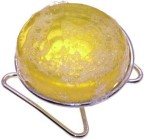
Transparent soap has a long history dating back to 1789, when Andrew Pears first manufactured the bar that bears his name. Making soap transparent is an extra step for the soap maker, but one that is most worthwhile. Transparent soap can be made from the same solid fats (palm and coconut oil) as opaque soap, but usually the only liquid oil that is ever used is castor oil.Clearly Sunshine Transparent Soap

Why is transparent soap transparent?

Soap is transparent when it contains no large crystals, and theoretically all opaque soap can be made transparent, although some oil combinations do not result in a very clear soap. Recipes for transparent soap are usually a closely guarded secret because of the amount of experimentation involved in achieving the desired results. If you've ever tried to make any soap yourself, you'll realize that the combinations of oil and the proportions of them are infinite.

What is the definition of transparent soap?

According to one reference, soap is considered to be transparent if you can read 14pt bold text through a 1/4 inch thick slice of soap.

What makes transparent soap so good?
Transparent soap feels good, lathers beautifully and leaves your skin feeling squeaky clean while not drying it. How does it do all this? Because the soap crystals in transparent soap are small and there is no unnecessary excess oil, the soap is, in effect, pre-dissolved and ready for action, and feels extremely smooth to the skin. It takes little effort to lather up thick, creamy lather, and it takes little effort to rinse. No residue is left on your skin or in the sink and tub. No residue means less clogged pores and blemishes and no soap scum to scrub clean. Other handmade natural soaps (that are not transparent) contain up to 15% extra oil to ensure that there is no free lye left in the bar. This extra oil softens and weakens the solidity and effectiveness of the bar, lowers the lathering, and leaves oily residue on your skin and on the sink and tub. This is not our definition of clean!

How long does transparent soap last?
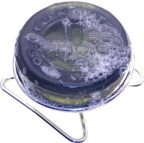
Transparent soap lasts a long time and smells fresh right down to the last tinyLicorice Mint Transparent Soap sliver. Because transparent soap is ready for action, you need only a very little bit to build up voluminous lather. Challenge yourself to see how two strokes of the bar through your hair builds to a mountain of silky smooth lather!

How is transparent soap made?
To produce transparent soap, opaque soap is dissolved in hot ethanol (grain alcohol), glycerine and a sugar solution. Once the opaque soap has dissolved, and the mixture has been allowed to cool a little, scent and colour are added. The soap broth is cooled quickly in molds until completely solid. The addition of the alcohol and sugar, combined with quick cooling prevents crystal growth. The opaque 'base soap' that is used can not contain any extra fat or extra lye, or the soap will not be clear. Working with alcohol can be dangerous, especially at high temperatures. Since special equipment is necessary to produce transparent soap safely, we don't recommend you try to make it at home.
Transparent Soap Collection
Check out our selection of handmade natural transparent soap!

Clearwater Soap Works announces Blog!


This blog will be used to document specials, new items, and relevant news articles that are of interest to our customers.